NFC Business Cards: The Future of Networking (2026 Guide)
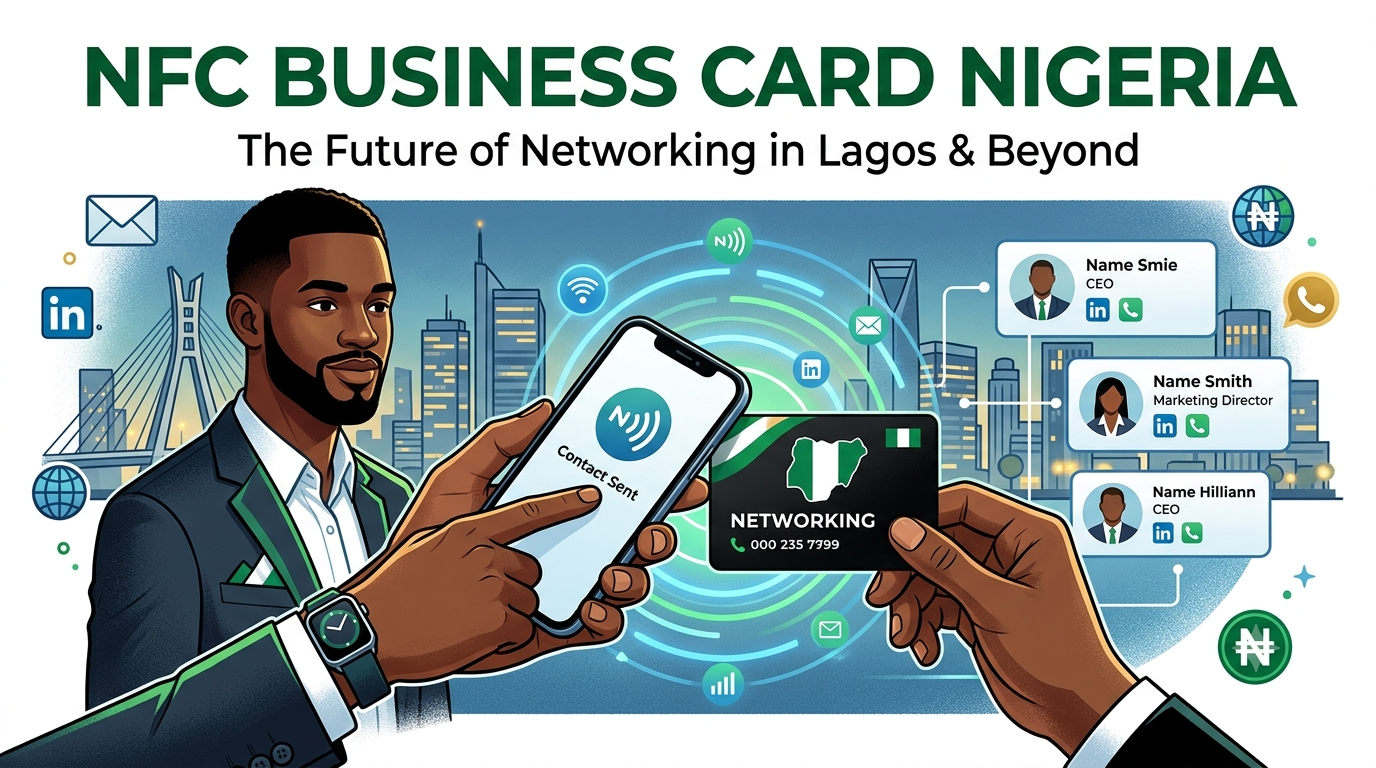
Focus Keywords: NFC business card, digital business card, contactless networking, smart business card, tap to share
Secondary Keywords: NFC business card vs QR code, best NFC business cards 2026, NFC card benefits, digital profile, networking technology
---
NFC Business Cards: The Future of Networking (2026 Guide)
You've probably seen someone tap a sleek metal card against a phone and watched a contact page appear instantly. No fumbling for paper. No "sorry, I'm out of cards." Just a tap and done.
That's an NFC business card. And while the technology feels like magic, the reason most people buy one—and the reason some end up disappointed—comes down to something almost nobody talks about.
Let's break down how these cards actually work, whether you need one, and the one thing you should build before you ever buy the card itself.
What Is an NFC Business Card?
An NFC business card is a physical card with a small wireless chip embedded inside. When you tap it against a smartphone, the phone opens a web page—usually your digital business card—with a save-to-contacts button. That's the entire trick.
NFC stands for Near Field Communication. It's the same short-range radio technology that powers tap-to-pay at checkout counters.
Most smartphones made after 2018 support NFC reading without any setup. The recipient doesn't need an app, doesn't need to unlock their phone in most cases, and doesn't need to do anything except tap.
How NFC Business Cards Work (In Plain English)
Feature NFC Card QR Code
Recipient action Hold phone near Point camera at code
Works through wallet Usually No
Works in low light Yes Harder
Physical card required Yes No
Initial cost $15–50 per card Free
Replacement cost $15–50 again Free
Inside an NFC card is a passive chip with a tiny antenna. It has no battery. When a phone comes within a few centimeters, the phone's own radio field powers the chip just long enough for it to transmit what's stored on it.
And what's stored on almost every commercial NFC business card? A URL. Not your name. Not your phone number. Not a contact file. A link.
The phone reads the link, shows a notification, and opens the browser to whatever page that link points to. The recipient taps "Save contact," and a standard .vcf file downloads into their contacts app.
Here's the full sequence at a real meeting:
1. You hold your card near their phone
2. Their phone buzzes
3. Your card page opens
4. They tap "Save contact"
That's it. No app downloads. No typing. No paper.
The Part Most Buyers Get Backwards
Here's what the marketing materials gloss over: the card is just a delivery mechanism. The product is the landing page.
Everything the other person actually experiences—your name and face, the save-to-contacts button, your booking link, your portfolio, the follow-up form—lives on the web page the chip opens. The chip contributes about half a second of theater at the start.
This matters because it explains the entire pricing structure of the category. NFC card subscriptions cost more than the plastic alone would suggest because you're mostly paying for the hosted profile, month after month. It's also why losing the card isn't a crisis—the page and link still exist, and a replacement chip can point at the same URL.
The sensible build order is: page first, hardware second—if you need hardware at all.
NFC Cards vs. QR Codes: An Honest Comparison
A QR code is a URL encoded as a pattern a camera can read. An NFC chip is a URL transmitted over short-range radio. Same payload, different courier.
Feature NFC Card QR Code
Recipient action Hold phone near Point camera at code
Works through wallet Usually No
Works in low light Yes Harder
Physical card required Yes No
Initial cost $15–50 per card Free
Replacement cost $15–50 again Free
Both technologies link to the same destination: your digital profile. NFC is faster and smoother—no camera app, no framing the code. It also has a premium, deliberate feel. Handing someone a heavy card and watching their phone light up is a small moment, and in sales, small moments count.
But QR codes are free, don't require a physical card, and work everywhere. If budget is a concern, start with a QR code and a solid landing page.
Why NFC Business Cards Are Worth It
The global NFC business card market was valued at USD 27.91 million in 2025 and is projected to reach USD 71.22 million by 2033, growing at a CAGR of 12.42%. This isn't a niche gimmick. It's a category with real momentum.
Key benefits:
· Instant sharing: A quick tap replaces fumbling for pen and paper
· Always up to date: Update your profile without replacing the card
· Eco-friendly and cost-effective: One card replaces hundreds of paper ones
· Lead capture and CRM integration: Many platforms offer built-in CRM, analytics, and lead tracking
· Premium impression: Metal and wood cards signal attention to detail
Top NFC Business Cards in 2026
We compared seven hardware vendors on prices pulled from their own stores. Here's the short version:
Provider Hardware Price Software Best For
V1CE From ~270 gold Free tier; paid plan separate Best card as an object
Mobilo 139 Pro $3/mo; Business $5/user/mo Best team value
TapTag From $3.95 Free forever Cheapest way to try a tap
Popl From ~$19.99 Pro $7.99/mo Most recognizable brand
Linq $14.99 Premium ~$7.49/mo Budget option
Wave 54 Pro $7/mo Balanced features
Tapt 65 Free tier; paid upgrades Eco-conscious buyers
The verdict in four lines:
· Best card as an object: V1CE—nothing else feels like it
· Best team value: Mobilo—cheapest serious subscription
· Cheapest way to try: TapTag—$3.95, genuinely no subscription
· Best reason to buy no card: A software-first solution—the link does the work, and the tap is one surface among four
The Real Question: Do You Actually Need One?
If you're in sales, real estate, consulting, or any role where you meet new people regularly, an NFC business card can streamline your follow-up and leave a memorable impression. The tap is faster than a QR scan, and the card itself becomes a conversation piece.
But if you meet people mostly online, or if you're on a tight budget, a well-designed digital business card with a QR code and a shareable link will get you 90% of the way there.
The card is not the product. Your landing page is. Build that first. Then decide if the tap is worth the premium.
---
Key Takeaways
· NFC business cards store a URL, not your contact details—the chip opens a web page
· The landing page matters more than the card itself
· NFC is faster and more premium than QR codes, but QR is free
· The market is growing at over 12% annually
· Start with a solid digital profile, then consider hardware
Ready to modernize your networking? Start by building your digital business card page today—then add the tap when you're ready.
Upgrade Your Executive Networking in Nigeria
Order your custom laser-engraved NFC metal card or matte PVC card with sub-10ms contactless response.
Order Your NFC Card Today (From ₦30,000)